Body Oxygen Transport System: How Oxygen Travels Through the Human Body
Meta Description
Learn how the body oxygen transport system works. Discover how the lungs, heart, blood, and cells work together to deliver oxygen throughout the human body.
Focus Keywords
Body oxygen transport system, oxygen transport in the human body, how oxygen moves through the body, oxygen circulation system, respiratory and cardiovascular system.
Introduction
Oxygen is one of the most essential elements required for human life. Every cell in the body depends on oxygen to produce energy and perform vital functions. Without oxygen, cells would quickly stop functioning, and the body would not be able to survive.
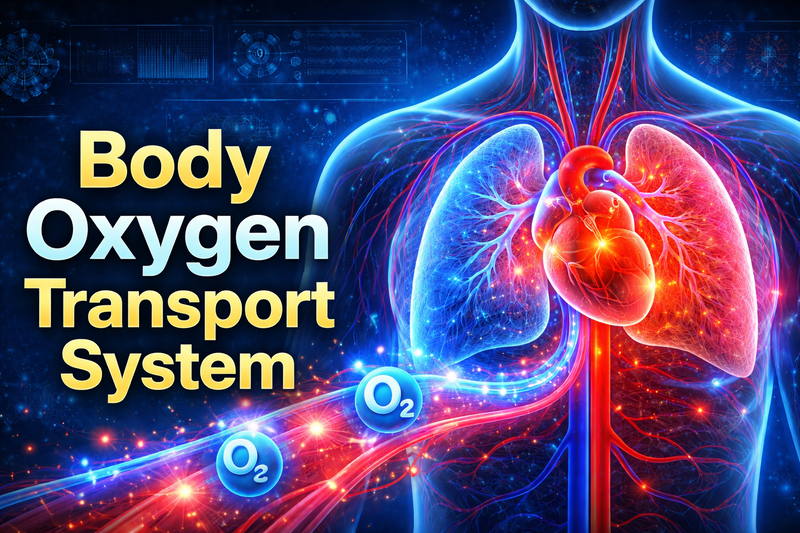
The human body has developed a highly efficient system to transport oxygen from the air we breathe to every cell in the body. This process is known as the body oxygen transport system. It involves several organs and systems working together, including the lungs, heart, blood vessels, and blood.
When we inhale, oxygen enters the lungs and moves into the bloodstream. The heart then pumps oxygen-rich blood through arteries and capillaries, delivering oxygen to tissues and organs throughout the body. At the same time, carbon dioxide, a waste product of cellular metabolism, is carried back to the lungs to be exhaled.
This continuous exchange of oxygen and carbon dioxide is essential for maintaining life and supporting the body's metabolic processes.
In this article, we will explore how oxygen enters the body, how it travels through the bloodstream, and how cells use oxygen to produce energy.
The Importance of Oxygen in the Human Body
Oxygen plays a critical role in maintaining the body's biological processes. It is necessary for cellular respiration, the process through which cells generate energy in the form of ATP (adenosine triphosphate).
Every organ in the body requires oxygen to function properly. The brain, for example, is highly dependent on oxygen and uses about 20% of the body's oxygen supply. If the brain does not receive oxygen for just a few minutes, serious damage can occur.
Muscles also require oxygen, especially during physical activity. When you exercise, your muscles demand more oxygen to produce the energy needed for movement.
Oxygen is also essential for:
Maintaining healthy metabolism
Supporting immune system functions
Producing energy in cells
Removing carbon dioxide from the body
Maintaining proper organ function
Without oxygen, the body's systems would fail quickly.
The Respiratory System and Oxygen Intake
The respiratory system is responsible for bringing oxygen into the body and removing carbon dioxide.
This system includes several organs:
Nose and nasal cavity
Pharynx
Larynx
Trachea
Bronchi
Lungs
When a person breathes in, air enters through the nose or mouth and travels through the respiratory tract until it reaches the lungs.
Inside the lungs are millions of tiny air sacs called alveoli. These structures play a vital role in oxygen exchange. Oxygen from the inhaled air passes through the thin walls of the alveoli and enters the bloodstream.
At the same time, carbon dioxide moves from the blood into the alveoli and is expelled when the person exhales.
This process is known as gas exchange.
Structure of the Lungs
The lungs are large, spongy organs located in the chest cavity on either side of the heart. They are protected by the rib cage and play a key role in oxygen transport.
The right lung has three lobes, while the left lung has two lobes because the heart occupies some of the space on that side.
Inside the lungs are branching tubes called bronchi and bronchioles. These airways carry air deeper into the lungs until it reaches the alveoli.
The alveoli are surrounded by tiny blood vessels called capillaries. These capillaries allow oxygen to move from the air into the blood and carbon dioxide to move from the blood into the lungs.
The large surface area of the alveoli allows efficient gas exchange, ensuring that oxygen quickly enters the bloodstream.
The Role of the Heart in Oxygen Transport
The heart plays a central role in the oxygen transport system by pumping oxygen-rich blood throughout the body.
The heart has four chambers:
Right atrium
Right ventricle
Left atrium
Left ventricle
Deoxygenated blood from the body enters the right atrium. The right ventricle then pumps this blood to the lungs through the pulmonary arteries.
In the lungs, oxygen enters the blood and carbon dioxide is removed. The oxygenated blood returns to the left atrium of the heart and is pumped into the left ventricle.
The left ventricle then pumps oxygen-rich blood through the aorta to the rest of the body.
This continuous pumping ensures that oxygen reaches every organ and tissue.
Blood and Oxygen Transport
Blood acts as the transportation medium that carries oxygen throughout the body.
The main component responsible for oxygen transport is hemoglobin, a protein found in red blood cells.
Hemoglobin binds to oxygen molecules in the lungs and carries them through the bloodstream to tissues and organs.
Each red blood cell contains millions of hemoglobin molecules, allowing the blood to transport large amounts of oxygen efficiently.
When oxygen reaches the body's tissues, it is released from hemoglobin and enters cells where it is used to produce energy.
The Role of Red Blood Cells
Red blood cells are specially designed to transport oxygen.
These cells have a unique shape called a biconcave disc, which increases their surface area and allows them to carry more oxygen.
Red blood cells also lack a nucleus, providing more space for hemoglobin.
These cells travel through blood vessels delivering oxygen to tissues and collecting carbon dioxide for removal.
Red blood cells are produced in the bone marrow and typically live for about 120 days before being replaced.
Oxygen Delivery to Cells
Once oxygen-rich blood reaches tissues, oxygen moves from the blood into the cells.
This occurs through tiny blood vessels called capillaries. Capillaries have thin walls that allow oxygen and nutrients to pass into surrounding cells.
Inside cells, oxygen is used in a process called cellular respiration. This process occurs in the mitochondria and produces ATP, the energy currency of the cell.
ATP powers many cellular activities such as muscle contraction, nerve signaling, and protein synthesis.
Removal of Carbon Dioxide
During cellular respiration, carbon dioxide is produced as a waste product.
The bloodstream carries carbon dioxide from the cells back to the lungs.
Carbon dioxide travels through veins to the heart and then to the lungs, where it is released during exhalation.
This removal of carbon dioxide helps maintain the body's acid-base balance and prevents toxic buildup in tissues.
Pulmonary Circulation
Pulmonary circulation refers to the movement of blood between the heart and the lungs.
This system ensures that oxygen-poor blood reaches the lungs for oxygenation and that oxygen-rich blood returns to the heart.
Pulmonary circulation includes:
Pulmonary arteries
Lung capillaries
Pulmonary veins
This circulation plays a vital role in the oxygen transport system.
Systemic Circulation
Systemic circulation refers to the movement of oxygen-rich blood from the heart to the rest of the body.
After receiving oxygen from the lungs, the heart pumps blood through arteries and capillaries to deliver oxygen to organs and tissues.
Once oxygen is used by cells, the blood becomes deoxygenated and returns to the heart through veins.
This cycle repeats continuously to maintain oxygen supply throughout the body.
Factors That Affect Oxygen Transport
Several factors can influence how effectively oxygen is transported in the body.
These include:
Lung health
Heart function
Hemoglobin levels
Physical activity
Altitude
For example, at high altitudes, oxygen levels in the air are lower, making it harder for the body to obtain enough oxygen.
Similarly, conditions such as anemia or lung disease can reduce oxygen transport efficiency.
Maintaining a Healthy Oxygen Transport System
Keeping the oxygen transport system healthy is essential for overall well-being.
Several lifestyle habits can help maintain healthy lungs, heart, and blood.
Regular exercise strengthens both the respiratory and cardiovascular systems.
Eating a balanced diet rich in iron helps maintain healthy hemoglobin levels.
Avoiding smoking protects lung tissues and improves oxygen absorption.
Staying hydrated also helps maintain proper blood circulation.
Interesting Facts About Oxygen Transport
The human body contains approximately 5 liters of blood.
Red blood cells travel through the body in about 20 seconds.
The lungs contain around 300 million alveoli.
The surface area of the lungs is roughly the size of a tennis court.
These facts demonstrate how efficient the oxygen transport system is.
Conclusion
The body oxygen transport system is one of the most essential systems in the human body. It ensures that oxygen reaches every cell while removing carbon dioxide and other waste products.
This system relies on the coordinated function of the respiratory system, cardiovascular system, and blood.
The lungs absorb oxygen from the air, the heart pumps oxygen-rich blood throughout the body, and red blood cells deliver oxygen to tissues.
Without this complex and efficient system, the body would not be able to produce the energy required for survival.
Understanding how oxygen transport works helps us appreciate the importance of maintaining healthy lungs, heart, and blood circulation.
By adopting healthy lifestyle habits such as regular exercise, balanced nutrition, and avoiding harmful substances, we can support the body's oxygen transport system and maintain long-term health.
Comments
No comments yet. Be the first to comment!