Heart and Lung Connection
How the Heart and Lungs Work Together to Sustain Life
Meta Description:
Learn how the heart and lungs work together in the cardiopulmonary system to deliver oxygen, remove carbon dioxide, and maintain life. A complete guide to the heart and lung connection.
Introduction
The heart and lungs are two of the most essential organs in the human body. These organs work together continuously to ensure that oxygen reaches every cell while carbon dioxide is removed as waste. This cooperative function is known as the heart and lung connection or the cardiopulmonary system.
Every moment of our lives, this system works silently in the background. The lungs bring oxygen into the body through breathing, while the heart pumps oxygen-rich blood throughout the body. Without this coordinated partnership, the body would not be able to produce energy, sustain organ function, or maintain life.
Understanding the relationship between the heart and lungs helps us appreciate how the body functions and why maintaining cardiovascular and respiratory health is extremely important.
In this article, we will explore the anatomy of the heart and lungs, how they work together, the process of oxygen exchange, the role of circulation, and how lifestyle choices affect this vital system.
Understanding the Cardiopulmonary System
The cardiopulmonary system refers to the combined functioning of the cardiovascular system and the respiratory system.
The Cardiovascular System
The cardiovascular system includes:
The heart
Blood vessels
Blood
Its primary function is to transport oxygen, nutrients, hormones, and waste products throughout the body.
The Respiratory System
The respiratory system includes:
The lungs
Airways (trachea, bronchi, bronchioles)
Alveoli
Its primary role is to bring oxygen into the body and remove carbon dioxide.
The connection between these two systems ensures that oxygen from the air reaches the bloodstream and eventually every cell in the body.
Anatomy of the Human Heart
The heart is a muscular organ roughly the size of a fist. It is located slightly left of the center of the chest and protected by the rib cage.
The heart functions as a pump that circulates blood throughout the body.
The Four Chambers of the Heart
The heart consists of four chambers:
Right Atrium – receives oxygen-poor blood from the body
Right Ventricle – pumps blood to the lungs
Left Atrium – receives oxygen-rich blood from the lungs
Left Ventricle – pumps oxygen-rich blood to the body
These chambers work in a synchronized manner to maintain continuous blood circulation.
Heart Valves
The heart contains four important valves that regulate blood flow:
Tricuspid valve
Pulmonary valve
Mitral valve
Aortic valve
These valves ensure that blood flows in one direction only.
Anatomy of the Human Lungs
The lungs are two large, spongy organs located on either side of the chest.
They are responsible for gas exchange, which means bringing oxygen into the bloodstream and removing carbon dioxide.
Major Components of the Lungs
The lungs contain several important structures:
Trachea (windpipe)
Bronchi
Bronchioles
Alveoli
Alveoli
The lungs contain about 300 million alveoli.
These tiny air sacs are surrounded by small blood vessels called capillaries.
The alveoli are where oxygen enters the blood and carbon dioxide leaves the blood.
How the Heart and Lungs Work Together
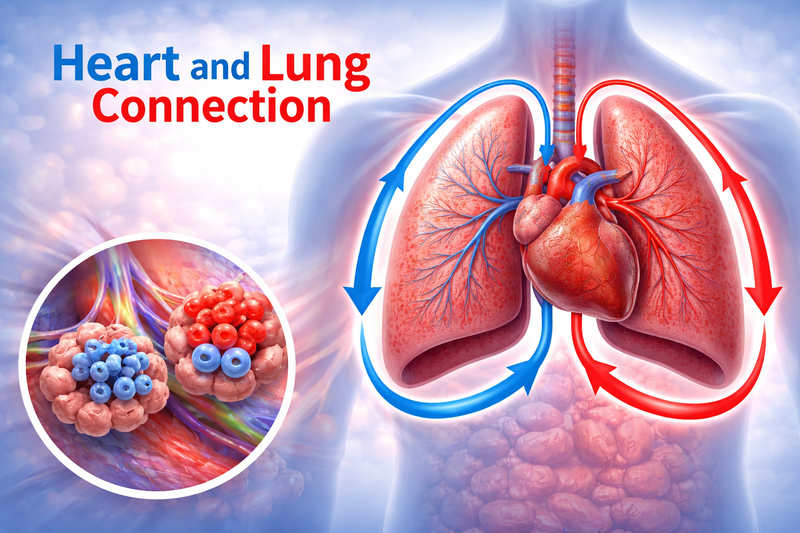
The heart and lungs work together through a process called pulmonary circulation.
This process allows oxygen-poor blood to travel from the heart to the lungs and return as oxygen-rich blood.
Step 1: Blood Returns to the Heart
After delivering oxygen to body tissues, blood becomes oxygen-poor and returns to the heart through veins.
This blood enters the right atrium.
Step 2: Blood Moves to the Right Ventricle
The blood flows from the right atrium to the right ventricle.
The right ventricle pumps this blood toward the lungs.
Step 3: Blood Travels to the Lungs
The blood travels through the pulmonary artery to reach the lungs.
This blood contains high levels of carbon dioxide.
Step 4: Gas Exchange in the Lungs
Inside the lungs, carbon dioxide leaves the blood and oxygen enters the bloodstream through the alveoli.
This process refreshes the blood with oxygen.
Step 5: Oxygen-Rich Blood Returns to the Heart
The oxygen-rich blood travels back to the heart through the pulmonary veins.
It enters the left atrium.
Step 6: Blood Is Pumped to the Body
The blood moves into the left ventricle, which pumps it through the aorta to the entire body.
This cycle repeats continuously.
The Importance of Oxygen in the Body
Oxygen is essential for survival.
Cells use oxygen to produce energy through a process called cellular respiration.
Without oxygen:
Brain cells begin dying within minutes
Organs stop functioning
The body cannot produce energy
The heart and lungs ensure that oxygen reaches every part of the body.
Carbon Dioxide Removal
Carbon dioxide is a waste product created when cells produce energy.
If carbon dioxide accumulates in the body, it can cause serious health problems.
The lungs remove carbon dioxide through breathing.
When we exhale, carbon dioxide leaves the body and fresh oxygen enters.
Role of Blood in Oxygen Transport
Blood plays a major role in the connection between the heart and lungs.
Red Blood Cells
Red blood cells contain hemoglobin, a protein that binds to oxygen.
When blood passes through the lungs:
Oxygen attaches to hemoglobin
Blood becomes oxygen-rich
Oxygen is transported throughout the body
This system allows efficient oxygen delivery.
Pulmonary Circulation vs Systemic Circulation
There are two main types of blood circulation in the body.
Pulmonary Circulation
Pulmonary circulation refers to the movement of blood between the heart and lungs.
Systemic Circulation
Systemic circulation refers to blood flow between the heart and the rest of the body.
Both systems work together to maintain life.
How Exercise Strengthens the Heart and Lungs
Regular physical activity improves cardiopulmonary health.
When a person exercises:
The heart beats faster
The lungs breathe more deeply
Blood circulation increases
Over time, exercise strengthens the heart muscle and improves lung capacity.
This allows the body to use oxygen more efficiently.
Diseases That Affect the Heart and Lungs
Several diseases can disrupt the connection between the heart and lungs.
Heart Diseases
Examples include:
Coronary artery disease
Heart failure
High blood pressure
Heart valve disease
Lung Diseases
Examples include:
Asthma
Chronic obstructive pulmonary disease (COPD)
Pneumonia
Lung cancer
These conditions can reduce oxygen delivery to the body.
Signs of Cardiopulmonary Problems
Symptoms that may indicate heart or lung issues include:
Shortness of breath
Chest pain
Fatigue
Rapid heartbeat
Persistent coughing
Medical evaluation is important if these symptoms occur.
Lifestyle Habits for Healthy Heart and Lungs
Maintaining healthy habits supports the cardiopulmonary system.
Healthy Diet
Eat foods such as:
Fruits and vegetables
Whole grains
Lean proteins
Healthy fats
Regular Exercise
At least 150 minutes of moderate exercise per week improves heart and lung health.
Avoid Smoking
Smoking damages lung tissue and increases the risk of heart disease.
Maintain Healthy Weight
Excess weight puts strain on both the heart and lungs.
Interesting Facts About the Heart and Lungs
The heart beats about 100,000 times per day
The lungs take around 20,000 breaths daily
The heart pumps about 7,500 liters of blood each day
The lungs contain hundreds of millions of alveoli
These organs work non-stop throughout life.
Future Medical Research
Scientists are constantly studying new ways to improve heart and lung health.
Research areas include:
Artificial heart technology
Lung regeneration
Stem cell therapy
Advanced cardiac treatments
These advancements could help millions of people worldwide.
Conclusion
The heart and lungs form a powerful partnership that keeps the human body alive.
The lungs bring oxygen into the bloodstream, while the heart pumps oxygen-rich blood to every organ and tissue.
This continuous cycle ensures that cells receive the oxygen they need to produce energy and maintain normal function.
Understanding the heart and lung connection highlights the importance of protecting these vital organs through healthy lifestyle choices.
Regular exercise, balanced nutrition, avoiding smoking, and maintaining a healthy weight all contribute to a strong cardiopulmonary system.
By taking care of our heart and lungs, we support overall health, longevity, and quality of life.
Comments
No comments yet. Be the first to comment!